

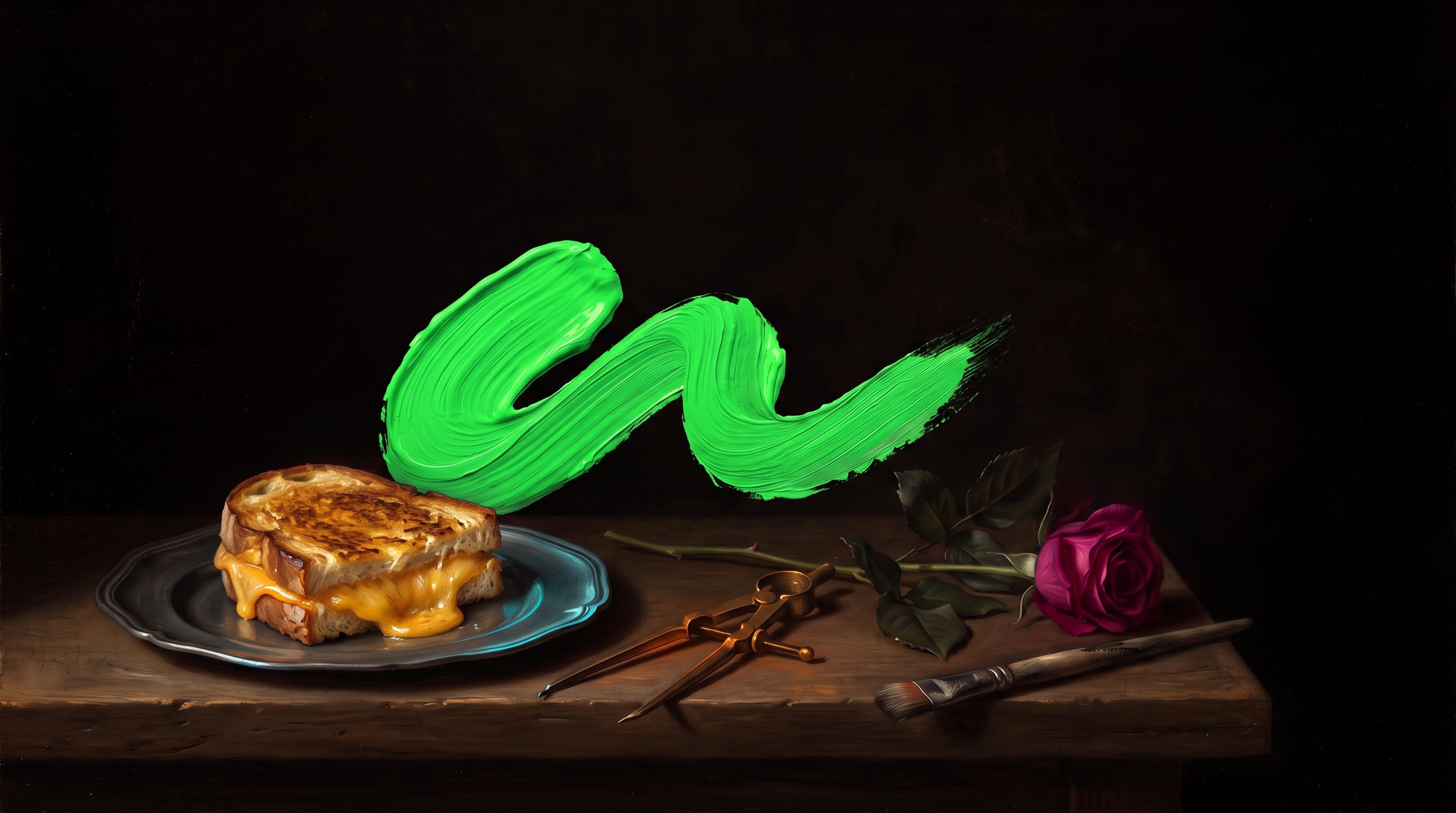
Back in 2023, when ChatGPT was still a novelty, Lex Fridman hosted Berkeley mathematician Edward Frenkel on his podcast, and among the many things they discussed was Frenkel’s book, Love and Math. Frenkel has argued that maths and love are the only two languages every human being can speak. I would take it a step further: they are the only two things that cannot be explained by anything else, nor by each other. No equation will make anyone feel love, and no amount of love will prove a theorem, which puts the two of them at that same axiomatic level.
On the maths side of that equation, AI has been making some serious claims in recent months, and earlier this week OpenAI published 722 maths papers written by one of its AI models that has not been released yet. OpenAI had given the model around 4,000 unsolved research problems to crack, and the papers laid out the results it judged significant, including solutions to hundreds of open questions. On average each result took the equivalent of about three hours of ChatGPT Pro thinking, roughly the length of a decent Mediterranean lunch.
Love, on the other hand, is another story. Last year OpenAI acquired io, Jony Ive’s device start-up, for $6.5bn, and LoveFrom, the studio Mr Ive named after a remark by Steve Jobs about making things with love and care for people you will never meet, now does design work across the AI frontier lab.
Now think of a sandwich: even when it is just for yourself, and even in a hurry, one made with love and presented with care beats the one put together in a rush over the sink. The same goes for software, and while this issue is not about love (I will leave that for another occasion), it is about the care, design and judgment that go into the things we make, now that machines are starting to do more of that.
I hope you enjoy it!
Made to measure
Software made for an audience of one has been showing up around us for a while. A few weeks ago my son and co-founder Karim, who is studying business and finance at university, vibe coded (built by describing what he wanted to an AI, rather than writing the code himself) his own software to stream music from his laptop to the myriad of old and new wireless speakers we have around the house. He did not build it with the intention to sell it, though he probably should! Meanwhile, a business partner told me yesterday how he had built his own management system as a freelance web designer and search engine optimisation (SEO) consultant, covering client accounts, invoicing and project management, all things that would otherwise be paid for one monthly subscription at a time, without necessarily talking to each other.
So maybe it is no surprise that this week OpenAI started rolling out a new capability called Intelligent UI, which enables ChatGPT to answer with pictures, charts, maps and small interactive tools rather than just the plain text responses we are used to. Intelligent UI takes the same idea and puts it inside the chat: the interface is made to measure… on demand! OpenAI says it wants ChatGPT to create more of the interfaces people need for everyday tasks, so that software adapts to people rather than the other way round. OpenAI’s launch announcement for Intelligent UI admits it plainly: “There’s still work ahead to improve the model’s design judgment.”
Design judgment, in plain English, is taste.
Colour by numbers
At the office, we have been doing something similar, but starting from our own taste rather than the machine’s (or lack thereof), and this week we worked on the design language system of our sister company Sprezzatura Media, using Claude Design. It starts by ingesting what our talented creative team has already produced in terms of a brand and its visual guidelines and builds a design system from it, meaning the colours, typefaces and rules the brand will use everywhere, and which every new project, document or piece of content would then follow automatically.
The exercise shed light on a couple of readability issues we had overlooked (mainly because I am colour blind), but more importantly it isolated one element of our brand that has always been close to my heart, and gave it the prominence and role it deserves.
A design language system has always been a way of documenting taste, clearly enough for others to apply it, so that whatever is built or developed looks, feels and reads exactly like the brand. When interfaces are built on demand, by machines following rules, that matters even more.
Interface killed the text star
In “Fast forward to 1997”, our issue from last month, we went back to the early days of the internet. This time we practically have to go back almost another 20 years, to 1979, to find the moment computers moved from text to pictures. In December 1979 Steve Jobs and a group of Apple engineers visited Xerox PARC, the photocopier company’s research centre in Palo Alto, and saw the Alto, a computer with a mouse, windows and a graphical interface, at a time when most people using a computer were typing in a command and reading back lines of text. Five years later, when Apple released the Macintosh in January 1984, it had, among many other innovations, different icons and several fonts, which Mr Jobs traced back to a calligraphy class he had dropped in on at Reed College. “It was the first computer with beautiful typography,” said Mr Jobs in his commencement speech at Stanford in 2005.
Since ChatGPT launched in November 2022, most of us have used it the way people used computers before the Mac: type in a prompt and read back lines of text, all in the same font and the same size, with little to tell a headline from a footnote. Many of us now speak to it as well, but the answer has mostly come back as text, unless the request was specifically for an image, a web page or a document.
Plain text has its advantages: it is quick to produce and the answer pastes easily into a contract, an email or another chat box. AI agents do not mind it either, as they read text most efficiently, and when AI talks to AI, design hardly matters. The downside is on the human eye as everything blurs into a stream of words that look exactly the same, and a comparison that should have been a chart arrives as paragraphs and bullet points. Intelligent UI comes with a setting to reduce the visuals for those who prefer their answers plain, which in itself could be a matter of taste.
The oldest trick in the book
Back to Sprezzatura, the name we also chose for our podcast, the concept refers to a kind of nonchalance that hides the mastery and care behind something and makes it look effortless, and is all about taste. The word first appeared in Baldassare Castiglione’s The Book of the Courtier, where the Count asks the ideal courtier to “temper all his movements with a certain good judgment and grace”, and sprezzatura is how that grace is achieved: the effort is still there, but good (design?) judgment decides what to show and what to keep out of sight.
Castiglione illustrates the idea with a painter: a single brushstroke, drawn so easily that the hand seems to reach its aim on its own, reveals the excellence of the craftsman, which each viewer appreciates according to his or her own capacity to judge. The same stroke could therefore be read twice; to the untrained eye it seems natural and free, while the trained eye knows how many years of practice and restraint it took to make that stroke look like it cost zero effort. The concept of sprezzatura plays to both audiences at once: one who is simply charmed, and the other who can see and appreciate the effort behind the ease.
Sprezzatura is also about not trying too hard, or at least never looking like it. AI slop, the machine-written padding that fills our feeds, does the exact opposite: every post is over-dressed, every sentence is searching for drama, and effort shows in all the wrong places, which is what makes it so cringey. Even when AI does produce that effortless stroke in seconds, and most of us are simply charmed, the trained eye looks for the mastery and judgment behind the convenience, and in a machine’s output there is often none, only a very confident and convincing surface.
The Book of the Courtier was printed by the Aldine Press in Venice in April 1528, the same press, founded by Aldus Manutius, that had introduced italic type a generation earlier. His punchcutter Francesco Griffo designed it to imitate the handwriting of the scholars of the time, and the Aldine Virgil of April 1501 was the first book printed entirely in italic: letters cast in metal, made to look as if a relaxed human hand had written them.
Machines can now produce serious maths in a matter of hours, and seem to be developing design judgment one release at a time. In October 2024 Dario Amodei, Anthropic’s chief executive, titled his essay on what AI could do for the world “Machines of Loving Grace”, borrowing from a 1967 Richard Brautigan poem. Grace, as Castiglione knew, can be learned and even written down, in a design system or a style guide, and taste falls somewhere between maths and love: it still takes someone who cares to decide what goes in it, and that part, like love, has to come from us.
Note to readers
This weekend I will be discussing red lines around AI on the closing panel of I Love Typography’s Font Tech & AI conference. Stay tuned for some highlights in the coming week.
Wirelessly yours,
Ziad Matar
Co-founder, Tokenando
Editor-in-chief, The Compute
After Hours
The past week has been bookended by two concerts, one of which was cancelled. It started last Friday at the Auditori Sant Martí, watching my good friend Kic Barroc play his latest album, Entor, live, and tonight I was supposed to head to Sala Apolo for a Vanessa Paradis concert, which ended up being cancelled.
Meanwhile, the writing was fuelled by stormy weather, good red wine and lots of comfort food, which led to a wake-up call: I have resumed my weekday runs to prepare for the Barcelona half marathon in February.
On TV we finished Task, a really good and unexpected show, and started season two of MobLand with a glass of whiskey at hand… while in my ears, some good tunes popped up courtesy of Bill Nighy’s exquisite podcast, ill-advised, and the playlists he publishes for each episode, including a good one by Alabama 3 called “Ain’t Goin’ to Goa”.
References
Los Angeles Magazine, on Edward Frenkel’s talk about love and maths, February 14, 2014: lamag.com
Lex Fridman Podcast #370, “Edward Frenkel: Reality is a Paradox – Mathematics, Physics, Truth & Love”, April 9, 2023: lexfridman.com
Business Standard, “OpenAI shares summaries of math problems solved by its unreleased model”, October 7, 2026: business-standard.com
Bloomberg, “OpenAI Closes $6.5 Billion Deal to Buy Jony Ive’s Device Startup”, July 9, 2025: bloomberg.com
MacDailyNews, on the origin of the LoveFrom name, June 28, 2019: macdailynews.com
OpenAI, “GPT‑6 and Intelligent UI for everyone”, October 7, 2026: openai.com
OpenAI Help Center, “GPT-6 and other models in ChatGPT”: help.openai.com
Anthropic, Claude Design announcement, April 17, 2026: anthropic.com
Dario Amodei, “Machines of Loving Grace”, October 2024: darioamodei.com
The Compute, Issue XVIII, “Fast forward to 1997”, September 3, 2026: tokenandoai.substack.com
Computer History Museum, “Xerox PARC”: computerhistory.org
Steve Jobs, Stanford commencement address, June 12, 2005, transcript: rev.com
Baldassare Castiglione, The Book of the Courtier, translated by Leonard Eckstein Opdycke (1901), Project Gutenberg: gutenberg.org
Royal Collection Trust, Il Libro del cortegiano, 1528: rct.uk
History of Information, “The Aldine Virgil: the First Book Completely Printed in Italic Type”: historyofinformation.com